
Published December 7, 2025 03:35PM
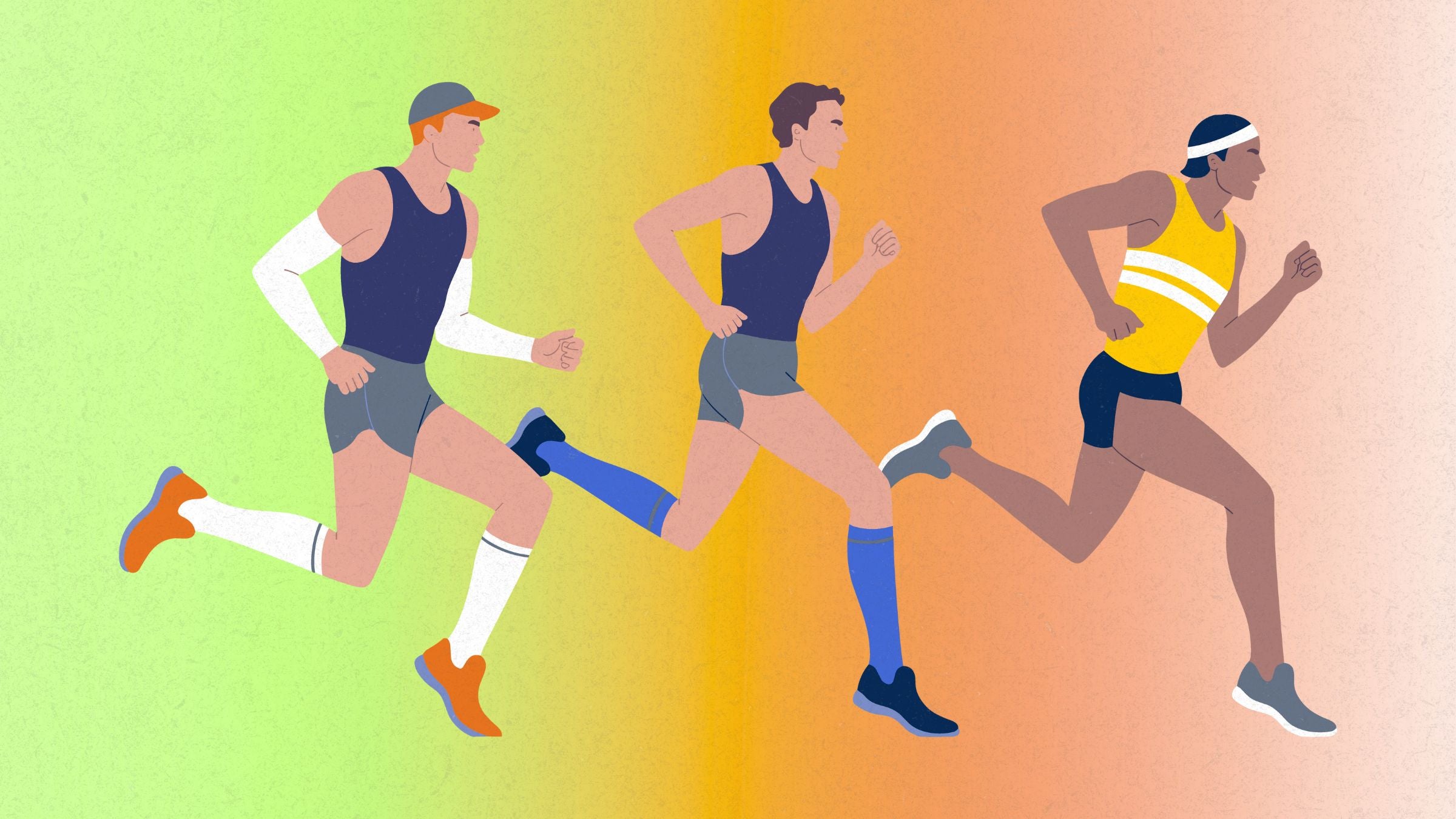
Maybe your high school coach harped on the importance of it, a magazine article you read way back when stressed the perils of skipping it, or your fave running influencer called it the “game-changing” secret to their success. The post-run cooldown is often depicted as a non-negotiable step—one that reduces soreness, lowers injury risk, and enhances performance in your next workout.
But is it truly that vital? Many time-strapped athletes completely ignore cooldowns and have lived to tell the tale. But if professionals are still prescribing it, there must be a reason, right?
We asked experts and dug into the latest research on whether you really need to cool down after a run and the best way to maximize that time.
The Physiological Effects of a Post-Run Cooldown
A common idea surrounding the cooldown is that it reduces your chances of injury, Spencer Agnew, a physical therapist and run coach in Madison, Wisconsin. But he points out that the research doesn’t actually support this notion. For example, a 2018 review published in the journal Sports Medicine concluded that regularly cooling down after lacing up did “not significantly reduce the incidence of running injuries.” In other words, slow jogging for ten minutes after an interval workout won’t diminish your chances of, say, straining your hamstring or tearing your Achilles. (Regular strength training, on the other hand, will reduce injury risk.)
A cooldown also doesn’t seem to improve performance or reduce the likelihood of delayed-onset muscle soreness (aka DOMS, the soreness that crops up the day or two after a hard workout). That’s because DOMS is the result of muscle damage that occurs during exercise, so cooling down after the fact is “not going to repair or heal” what’s already been done, Agnew says. Research confirms this: a 2021 review, published in the journal Exercise Physiology, found that stretching after exercise doesn’t impact how quickly DOMS dissipates.
As Ben Yamuder, a certified strength and conditioning specialist and exercise physiologist at Hospital for Special Surgery in New York City, sums it up: “There’s actually a pretty minimal physiological benefit” to the post-run cooldown. Even so, Yamuder is a “big fan” of cooling down.
What Are the Benefits of Cooling Down After a Run?
One true benefit of the cooldown is that it can help clear lactate—a byproduct of intense exercise—from your bloodstream. Lactate accumulation can trigger an achy, burning sensation in your muscles, and though your body would eventually clear it post-exercise, a cooldown can hasten that process. That means the cooldown can help your muscles feel better in the short-term, Yamuder says.
Another benefit is to your nervous system. During high-intensity exercise—think: hill repeats, a tempo run, or track sprints—you activate your sympathetic nervous system, the “fight-or-flight” response that kicks in when your body is under stress. The cooldown can encourage your parasympathetic nervous system to take the reins, helping you smoothly transition into a state of relaxation, Agnew says.
This can be especially helpful if you run hard in the hours before bedtime. “Bringing that nervous system back down can help you get to sleep more efficiently and have higher quality sleep,” he says. And it can also pay off if you’re heading to work or school after your run. That’s because it puts you in a state of ease that’s beneficial for performing cognitive tasks and sound decision-making, Agnew adds.
Last, but not least, there’s the enjoyment factor. Some people find that ending their workout with a calming cooldown—versus calling it quits right after that final butt-kicking interval sprint—makes their overall exercise routine more pleasant. If running can become more of a positive force thanks to a cooldown, “Let’s make it that way,” Agnew says. “We want life to be enjoyable.”
The Final Verdict on Cooling Down
OK, so here’s the thing: the research doesn’t support much physiological benefit of the cooldown, and it’s “really not harmful” to skip it, Yamuder says. But if you can spare the time?
“You should do it,” he says. “I just know, anecdotally, that I feel better after walking for five to ten minutes after I do any sort of workout or run,” he says. That’s likely due to the lactate clearance as well as the recovery mindset it helps facilitate, he explains. Plus, in today’s fast-paced, high-stress world, the cooldown can offer a chance to intentionally unwind and relax, Yamuder adds—something you may not otherwise get much of.
Agnew, for his part, suggests letting the intensity of your run dictate whether or not you cool down. If you’ve gone out for an easy run, then you likely haven’t accumulated lactate or flipped on your sympathetic nervous system. In other words, you “haven’t created an environment that’s going to require that cooldown,” he explains. But if you’ve done a higher-intensity session, such as sprints, a tempo run, hill repeats, or speedwork, then carving out the time for one would be a smart thing to do, he says.
The Best Cooldown for Runners
A cooldown doesn’t need to be long to be beneficial. At a minimum, “I normally tell people to do between five and ten minutes,” Agnew says, though you may choose to go longer, especially if you’re using the cooldown to reach a certain mileage goal.
As for what to do, really any form of dynamic movement that helps bring down your heart rate can do the trick, but the best method depends on your goals for the day.
If Lactate Clearance Is Your Goal
Prioritize activities like walking or jogging that have you working at about 30 to 40 percent of your VO2max. This could be slow running, walking, or an easy session on the spin bike or elliptical, Agnew says.
If Mobility Is a Priority
Add ten minutes of stretching, yoga, and foam rolling onto your easy run days, Yamuder says.
If You’re Mentally Transitioning Back Into the Day
Consider breath work, which can further promote relaxation and facilitate your return to the parasympathetic state. There are tons of different techniques out there, but Agnew recommends box breathing for its simplicity: inhale for four counts, hold your breath for four counts, exhale for four counts, then hold your breath for another four counts. Repeat this pattern for three to five total minutes.
Want more Outside health stories? Sign up for the Bodywork newsletter. Ready to push yourself? Enter MapMyRun’s You vs. the Year 2025 running challenge.
Source link