The “one-rep max” has long been the gold standard of the gym, but new research suggests it’s inaccurate, risky, and unnecessary. Here is why the traditional way of measuring strength is flawed—and a better way to track your progress.
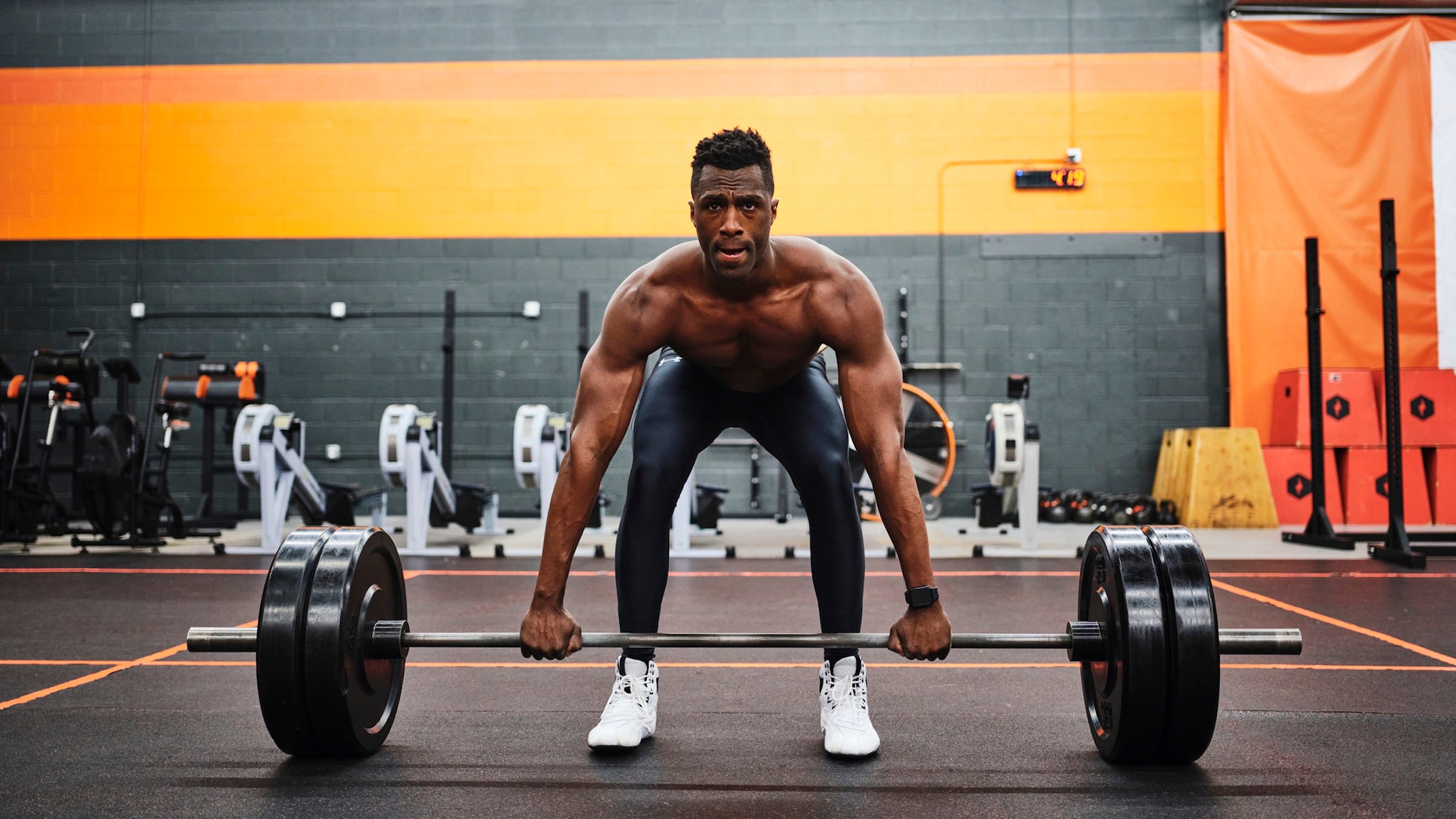
(Photo: O2O Creative / Getty)
Published April 2, 2026 03:27AM
If there’s one concept in strength training that even an endurance guy like me is familiar with, it’s the one-rep max. It’s the heaviest weight you can lift with a one-off effort for any given exercise. It matters for two reasons. One is that it’s how strength workouts are usually prescribed: you’ll aim for, say, 10 reps at 70 percent of one-rep max. The other is that it’s how you track progress: the underlying goal of lifting weights, after all, is to be able to lift heavier ones.
But a new commentary in the International Journal of Sports Physiology and Performance, from a team led by Brazilian researcher Irineu Loturco, argues that the one-rep max is overrated. Measuring it is inaccurate, inconvenient, and sometimes even dangerous—and, the authors argue, there are better ways of prescribing workouts and tracking strength gains. Here’s why.
What’s Wrong with One-Rep Max?
The main argument against one-rep max is that it’s difficult—or, you could even argue, fundamentally impossible—to measure accurately. If you lift a weight once, you know you can lift at least that amount. But if you add some weight and then fail, you don’t know whether you added too much, or whether you’re simply fatigued from the previous lift.
In practice, there are standardized methods of assessing one-rep max, with a structured warm-up, then a sequence of no more than five ascending lifts with three to five minutes rest between attempts. This should get you a decent estimate, but it’s time-consuming and fatiguing—and that’s just for one exercise! It’s not something you can do every week to track progress and readjust your loads for every lift you do, because it will basically displace one of your workouts. Hoisting such heavy loads also carries a heightened risk of injury.
And yet in theory, if you’re planning your workouts based on one-rep max, you’d like to have an updated value every day. Every workout is different, as your strength is (hopefully) increasing over time, and your baseline fatigue fluctuates depending on yesterday’s workout, last night’s sleep, today’s life stresses, and so on. The one-rep max that you measured a month ago is unlikely to give you a sensitive gauge for how many reps you should lift today.
Using Velocity Instead
The main alternative that Loturco and his colleagues propose is “velocity-based training.” This is an idea that has apparently been around since the 1970s, but has become more accessible with technological improvements. If you’re doing a barbell exercise like bench press or squat, velocity-based training simply involves tracking how quickly the bar rises. Initially you’d do this by wearing an accelerometer or attaching a transducer to the bar; these days you can download an app that then uses your phone’s camera to measure bar speed.
Velocity-based training is a big topic, and there are endless papers debating how to parse and make use of the data you collect. For our purposes, there are two key metrics to consider. One is how fast you do your first rep while “lifting with intent,” meaning you raise it as quickly as possible. This is a marker of your overall progress: if you used to lift 100 pounds at 1.5 meters per second, and now you lift it at 1.6 meters per second, it means you’re stronger. This improvement in “mean propulsive velocity” (the average speed for the active portion of the lift) means you’re exerting more force, which is essentially the same property you’re trying to measure with one-rep max; the difference is that it’s an improvement that you can measure instantly, objectively, and non-invasively.
The other key metric, used for guiding your decisions within a given workout, is how much your average speed decreases over the course of a set: once you get below a critical threshold, it’s time to stop. What that threshold should be is a tricky question. One study compared decreases of 0, 10, 20, and 40 percent, meaning that if your first rep is at 1.0 meters per second, then you keep lifting until your speed drops below 1.0 (or 0.9 or 0.8 or 0.6) meters per second. This study found that 20 and 40 percent built more muscle, but 40 percent had some negative effects on muscle contraction properties, leaving somewhere around 20 to 30 percent as the apparent sweet spot.
The Takeaway
The uncertainty about exactly what velocity threshold to use isn’t a problem that’s unique to velocity-based training; instead, it reflects a broader debate about the best way to strength train. The old-school perspective is that you don’t need to worry about bar velocity, or about setting a target for a number of reps; you just keep going in each set until you can’t complete any more reps.
More recently, research has suggested that always lifting to failure isn’t necessarily the best approach, because those last few reps generate a bunch of extra fatigue and injury risk without adding significant training benefit. In a study I wrote about last year, lifters made nearly the same gains when they stopped each set with two “repetitions in reserve”—that is, when they felt they’d be able to do two more reps before reaching failure—as when they actually went to failure in each set. This suggests that you don’t need to pick a super-aggressive threshold for velocity loss, but that may depend on your goals and experience.
Overall, Loturco’s claim that most of us don’t need to formally measure one-rep max makes sense. Heck, I’ve never measured it anyway. Velocity-based training also seems logical. In practice, I’m already doing a version of it when I try to leave one or two reps in reserve in each set: seeing the bar slow down is one of the key cues that tells me I’m close to failure. The more sophisticated velocity-tracking smartphone apps sound to me like the equivalent of a GPS watch for runners: fun, data-rich, potentially informative, but ultimately optional.
For more Sweat Science, sign up for the email newsletter and check out my new book The Explorer’s Gene: Why We Seek Big Challenges, New Flavors, and the Blank Spots on the Map.
Source link