Updated April 29, 2026 01:08PM
Key takeaways: New research published today, April 29, in the journal PLOS One suggests that doing exercises while lying down can help improve your posture and balance. The four moves include: abdominal contractions, glute bridges, heel pushes, and toe stretches. The study authors and physical therapists explain why these exercises are so good for your back and how to do them safely at home.
When you think about exercises to improve your posture and balance, you might imagine yoga poses or single-leg moves like Bulgarian split squats, which require a base level of strength and coordination.
But what if we told you you could work on your posture and balance while lying down, in as little as ten minutes a day? That’s exactly what a new study, published today, April 29, in PLOS One suggests. The specific exercises the researchers examined during their study strengthen your core, lower body, and feet, which help keep you stable and upright as you move.
Want to learn more about the workout itself and how you can do it at home, especially when you’re too tired to hit the gym or walk your favorite outdoor trail? We chatted with the study authors and physical therapists for their tips.
Walking Is Essentially “Controlled Falling Forward”
It’s an anatomical feat that humans can walk and move on two feet, considering the head, pelvis, and torso are so heavy compared to the lower body, according to the study.
“I’m honestly amazed every day at the complexity of the human body and how all of its systems work together so seamlessly to allow us to function,” Lori Diamos, a physical therapist based in Chicago, Illinois, and founder of PT Pearls Physical Therapy and Wellness, tells Outside. This is where having good posture and balance come into play. Posture allows us to stay upright, according to Diamos. Ideally, the head is stacked over the trunk, the trunk over the pelvis, and the pelvis over the lower body.
“A simple way to think about it is like building blocks. When they’re stacked well, the structure is stable. When they’re misaligned, things start to break down. So when posture shifts or alignment is off, it creates mechanical stress and strain over time. That’s when we start to see pain, injury, or loss of function,” Diamos says.
But posture incorporates more than just sitting or standing up straight, according to Kelli-Anne Yorks, a physical therapist at the Hospital for Special Surgery in New York City. Being upright is the optimal position for our bodies, placing the least amount of stress on our muscles, joints, and ligaments, she says. And having good posture helps us absorb shock, efficiently distribute our own weight and external weight across our bodies, and generate force for everyday activities.
Having good balance is also essential to standing upright. “Balance is critical because walking is essentially controlled falling forward,” Todd Haynes, a physical therapist and supervisor of outpatient rehab services at MelroseWakefield Hospital in Melrose, Massachusetts, says. “We’re constantly trying to prevent ourselves from falling flat on our noses. When we’re young and without mobility issues, we take nice big steps and propel ourselves forward by getting each leg out in front of us,” he says.
However, as we age, we tend to become weaker and less active, which results in shuffling with smaller steps, Haynes says. The upper body then becomes the primary mover rather than the lower body. “Maintaining an upright posture is crucial for balance and stability—it prevents us from becoming unstable enough to actually fall,” Haynes says.
The 10-Minute Workout You Can Do Lying Down
The study, which included two experiments, was small, with 18 participants in one and 22 participants in the other. In both experiments, participants performed a ten-minute coordination-focused workout while lying down once a day for two weeks. The workout included four exercises: abdominal contractions, glute bridges, heel pushes, and playing “rock, paper, scissors” with their feet.
Study co-author Tomoaki Atomi, a physical therapist and posture/movement control researcher based in Japan, says the four exercises are meant to stabilize the core (to support posture) and optimize both lower-leg and foot control to support the body when moving upright.
By the end of the two-week period, participants showed improvements in balance and agility during upright tasks, according to Atomi.
“Under normal conditions, humans control a relatively heavy trunk by coordinating multiple lower limb joints over a narrow base of support,” he says. “In this study, performing exercises in the [lying down] position—where antigravity muscle activity is reduced—allowed us to link trunk stability with lower limb coordination.”
In other words, performing exercises lying down helps isolate areas of the body, like the legs, while reducing some of the demands that gravity places on the body when upright, says Grayson Wickham, a physical therapist, certified strength and conditioning specialist, and founder of Stretch Mode, a flexibility and mobility app.
How to Do Each Exercise From the Study
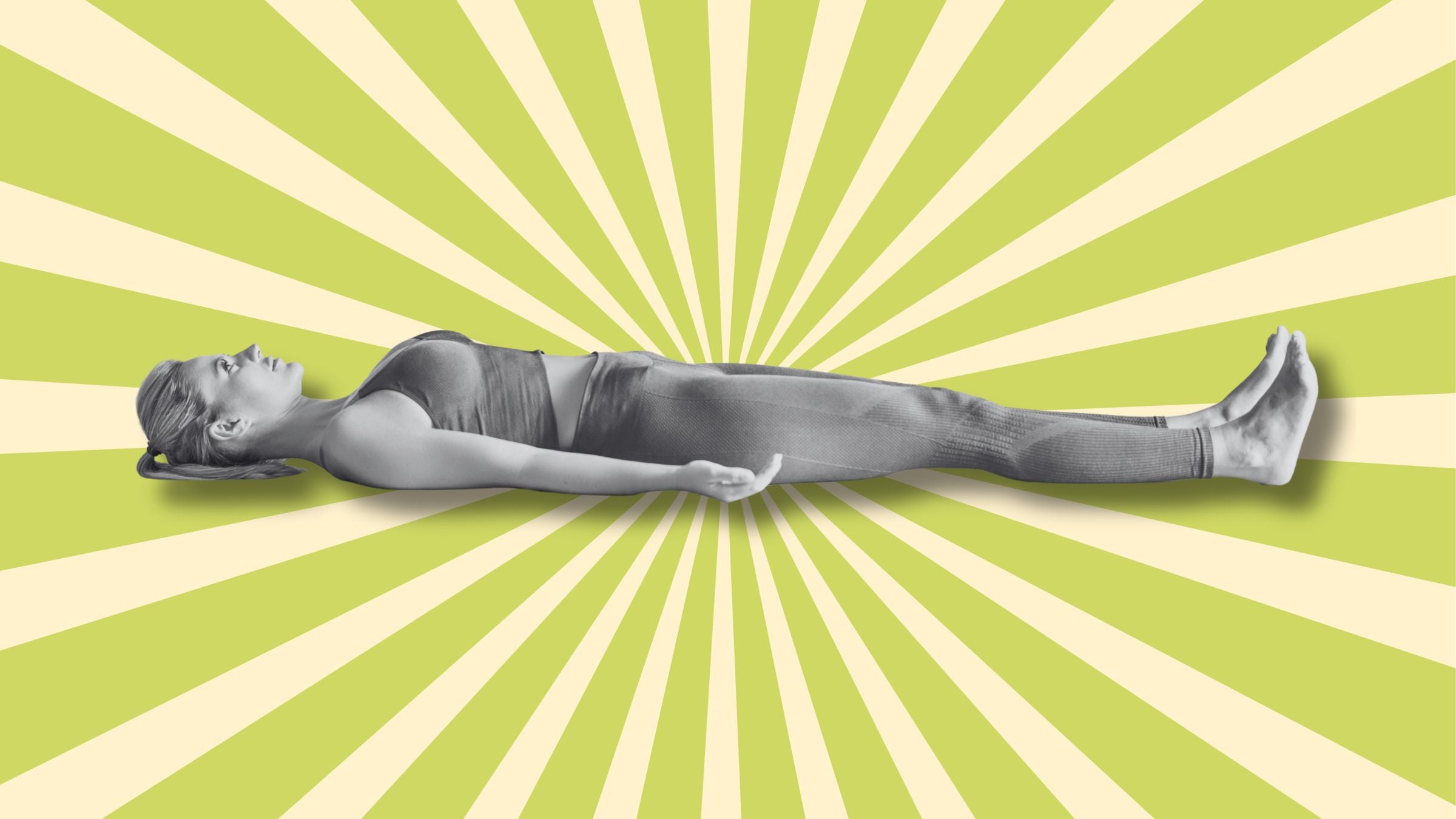
There are four exercises in the study’s workout. Perform each move for the amount of time stated below, then immediately move on to the next. The goal is to complete this as one continuous set, but take breaks if needed.
1. Abdominal Contractions
How to Do It:
- Lie on your back with feet flat on the floor, knees bent to 45 degrees.
- Place your hands on your abdomen.
- Contract your abdominal muscles against the pressure of your fingertips for 5 seconds, then relax.
- Repeat three times.
2. Glute Bridges
How to Do It:
- Lie on your back with feet flat on the floor, knees bent to 45 degrees.
- Place your hands on your abdomen.
- Contract your abdominal muscles against the pressure of your fingertips.
- Tilt your pelvis upward while also keeping your abdominal muscles contracted, like in a glute bridge.
- Hold this position for five seconds, then relax.
- Repeat ten times.
3. Heel Pushes
How to Do It:
- Lie on your back with both legs extended out in front of you and your arms down by your sides.
- Bend your left knee to 90 degrees and place the sole of your left foot on the floor.
- Flex your left foot (your toes should angle toward your shin as if you were stretching your calf muscle). Keep your left foot flexed while pressing your left heel into the floor, then slowly push it away from your body, letting it drag along the floor. Push until your left leg is fully extended.
- While your left leg is still extended, press your left heel into the floor again, pushing it away from you. Hold for 5 seconds, then release.
- Now bend your right knee and repeat steps 2–4 on the right leg.
- Repeat steps 2–4 three times on each leg.
4. Rock, Paper, Scissors with Your Feet
- Lie on your back with both legs extended out in front of you and your arms down by your sides.
- Clench your left toes (rock).
- While your toes are still clenched, lift the left big toe straight upwards (scissors).
- Bend your left big toe backward (another version of scissors)
- Spread all your left toes apart (paper)
- Switch feet.
- Repeat 5 times per foot.
The Best Way to Do These Exercises at Home
Ideally, the workout should be done on a firm surface such as the ground or on a yoga mat, according to Wickham. Lying in bed or on another soft surface can be an option if needed, he says, but it’s less stable and less supportive than a hard surface.
In terms of how often to do this workout each week, study co-author Yoriko Atomi, a skeletal muscle cell life scientist who spent 25 years as a physical education professor at the University of Tokyo, says it varies by age and activity level. However, she says that you can do it every morning to set yourself up for success each day. If you don’t have time to complete all four moves, even just choosing one specific movement to do for a minute is helpful, she explains.
The physical therapy experts we interviewed for this article are more cautious, suggesting anywhere from two to five times per week instead of every day in order to prioritize muscle recovery and prevent overuse injuries. Listen to your body, and if something feels off, scale back or stop completely, Diamos says.
It’s important to talk to a healthcare professional, like a physical therapist or your primary care doctor, before attempting these exercises, especially if you’re looking to do them on a soft surface, Yorks adds, as your lower back could sag and you could potentially pull a muscle.
Want more Outside health stories? Sign up for the Bodywork newsletter.
Source link